.svg)
Solutions
Use Cases
Ecosystem
Resources
Company
Log In
☰
May 18, 2026
For localization teams, scale isn’t new. What’s changed is the pace: more content, more languages, more stakeholders, and tighter timelines.
What’s also changed is the content itself.
Video, animation, and visual assets are now central to marketing, product, training, and internal communications. The unstoppable rise of multimedia has exposed a problem most organizations’ localization teams and technology weren’t built to solve.
Multimedia content doesn’t behave like text. It moves faster, involves more formats, requires greater coordination, and comes with higher visibility and, more importantly, risk. Yet in many organizations, multimedia localization is still handled:
As volumes increase, localization teams are asked to deliver more without the systems needed to support it.
The result is stress on scale, quality, and governance.
Traditional localization programs were designed around written content. Multimedia introduces challenges that sit outside those models, including:
Without orchestration, every new multimedia request becomes a custom project that’s hard to repeat, hard to optimize, and hard to govern.
As demand grows, most localization leaders find themselves managing this complexity across fragmented operations: point solutions that address only parts of the workflow, external vendors focused on narrow specialties, and manual handoffs between systems and teams. Reporting is often limited or nonexistent, making it difficult to track performance, cost, or turnaround times.
The result is structural risk: slower delivery as volume increases, inconsistent quality across markets, rising costs driven by rework and exceptions, and a diminished ability to support the business as it scales.
For localization leaders, the challenge isn’t demand. It’s sustainability.
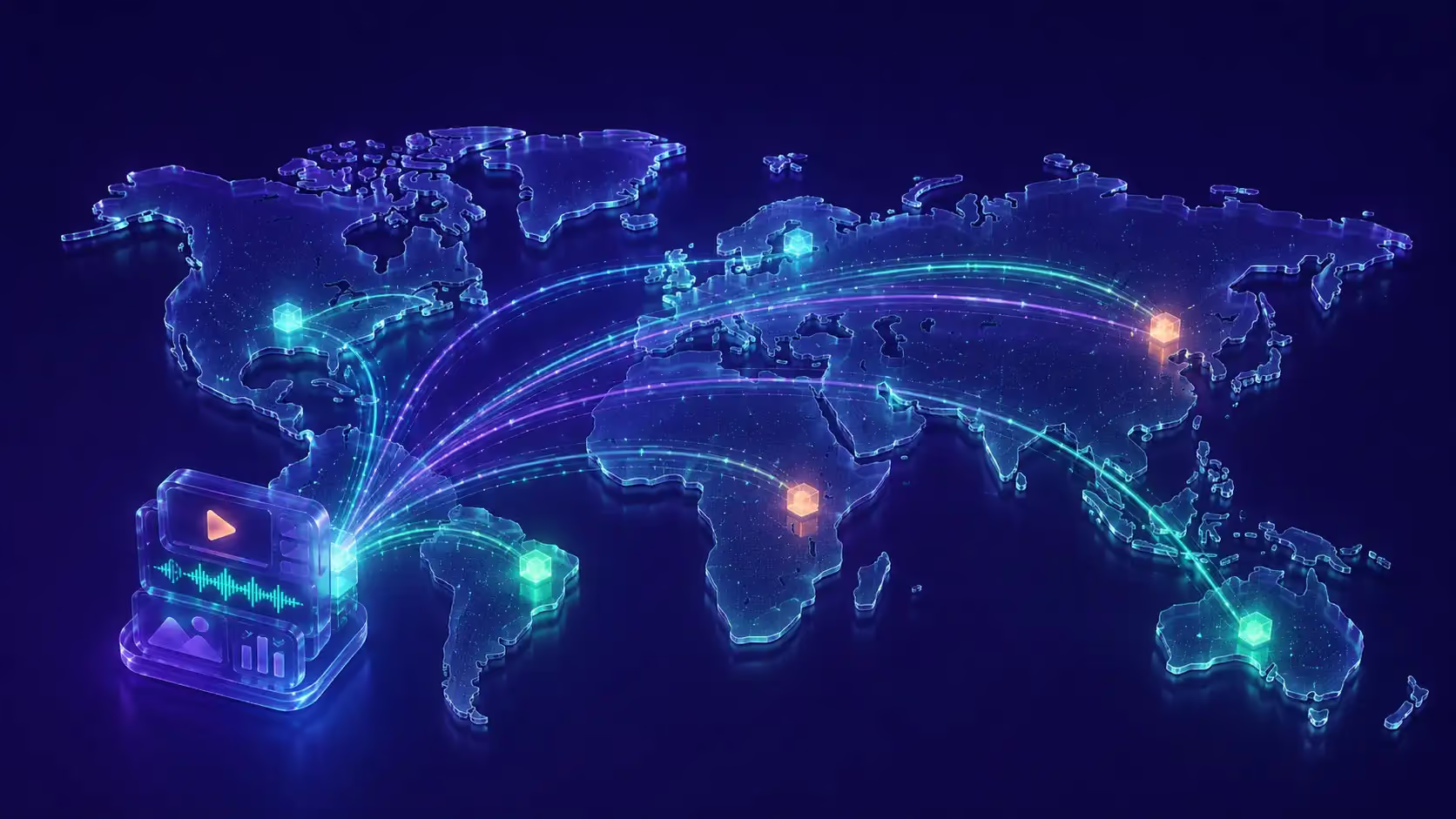
Acclaro’s Multimedia Orchestration solution delivers a structured, scalable approach to multimedia localization.
Rather than adding more tools or vendors, orchestration connects workflows across formats, languages, and delivery requirements - creating a system that can grow with demand.
At a practical level, our Multimedia Orchestration solution allows localization teams to:
AI plays a critical role in scaling multimedia localization, but those responsible for localization in organizations know that tools alone don’t guarantee outcomes.
Multimedia content often requires:
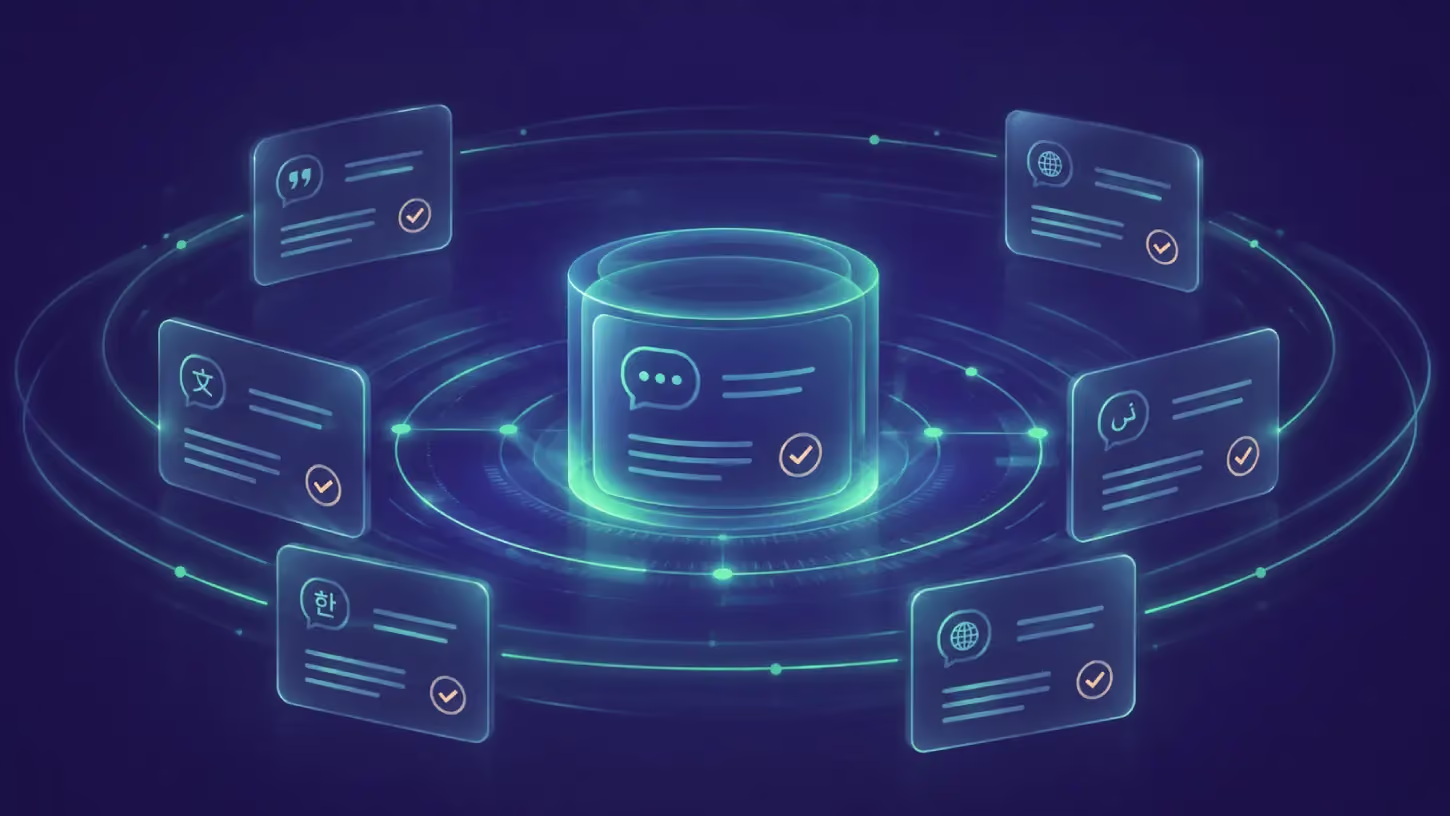
Acclaro’s Multimedia Orchestration solution balances automation with expert human review, ensuring speed and scale without sacrificing quality or accountability.
With multimedia orchestration in place, localization leaders can:
Localization leaders face a clear decision: where automation is sufficient against where human expertise and review is essential.
AI-driven workflows can deliver speed and efficiency where multimedia content is high-volume and low-risk. This includes internal training assets, product walkthroughs, knowledge-base content, and short-form social media.
Other content is high-visibility and business-critical. Brand campaigns, product launches, executive communications, customer testimonials, and regulated content require expert human linguistic and cultural review to protect brand, credibility, and market impact.
The challenge is knowing where to apply the right level of human oversight to the right content. Our Multimedia Orchestration solution enables organizations to scale automation where appropriate, while ensuring quality, nuance, and accountability where it matters most.
Multimedia isn’t a trend. It’s the dominant content format, and it’s only set to increase.
Organizations that treat multimedia localization as a side process will continue to struggle. Those that orchestrate it as a system will gain control, confidence, and scalability.
For those managing localization, the question is no longer if localizing multimedia needs structure, but how quickly that structure can be put in place.
Are you ready to transform how you localize and scale your multimedia content?
Talk to Acclaro about Multimedia Orchestration.




.svg)